The RIB Method
The RIB Method is based on the PhD research of Maria Terese Engell and is grounded in biomechanical principles for both horse and rider. It provides riders and trainers with a practical, applicable, professional, and research-based framework for developing correct riding technique, optimal position, and balance – both mounted and unmounted.
The goal is always the same: better riders, better performance, and improved horse welfare.

Good riding starts with a balanced rider. For this reason, the RIB Method begins with an analysis aimed to identify the rider’s individual errors, such as a crooked spine, a foot that collapses inward, or a leg that appears shorter than the other. We examine how the rider place and use different parts of the body in relation to each other in order to identify individual compensation patterns.
Read more
In the RIB Method, this analysis is always performed off the horse. This is a key element of the method, as rider position is traditionally analyzed directly in the saddle. By removing the horse’s movement as a disturbance, errors become easier to detect, and it becomes easier for the rider to recognize and correct their own asymmetries – and thereby improve their position.
Through simple and clear adjustments, we create a more stable, symmetrical, and balanced rider. Correct position is not about aesthetics; it is about correct technique and precise aids, leading to clearer communication and reduced unbalanced load on the horse.

Step two focuses on learning correct riding technique, which is universal and the same for all riders, regardless of level or discipline.
How a specific exercise is ridden – for example, a leg yield – is not optional. What the rider does with their body before applying rein and leg aids defines how the horse will respond. The RIB Method therefore expands the concept of the seat to include the position and use of the entire body, not just the seat bones.
It is essential that the rider knows what to do with their body to perform an exercise before getting on the horse. For this reason, the RIB Method teaches riders to execute exercises on the ground, without the horse, so that mounted training leads to faster, clearer, and more effective results for both horse and rider.
Read more
Stable basic balance, isolation, and weight transfer are three key skills all riders must master in order to apply correct riding technique.
- Stable basic balance refers to maintaining the body’s center of gravity steadily over the ball of the foot through different gaits and exercises. Without this foundation, correct riding technique is not possible.
- Isolation means the rider can move one body part freely without the rest of the body following the movement. This is a key skill for delivering precise and clear aids.
- Weight transfer refers to the ability to position the different body segments* so that they follow the horse’s direction and rhythm, rather than obstructing the horse’s movement.
Through these three key skills, the rider learns to use the entire body to communicate with the horse in a more precise and effective way.
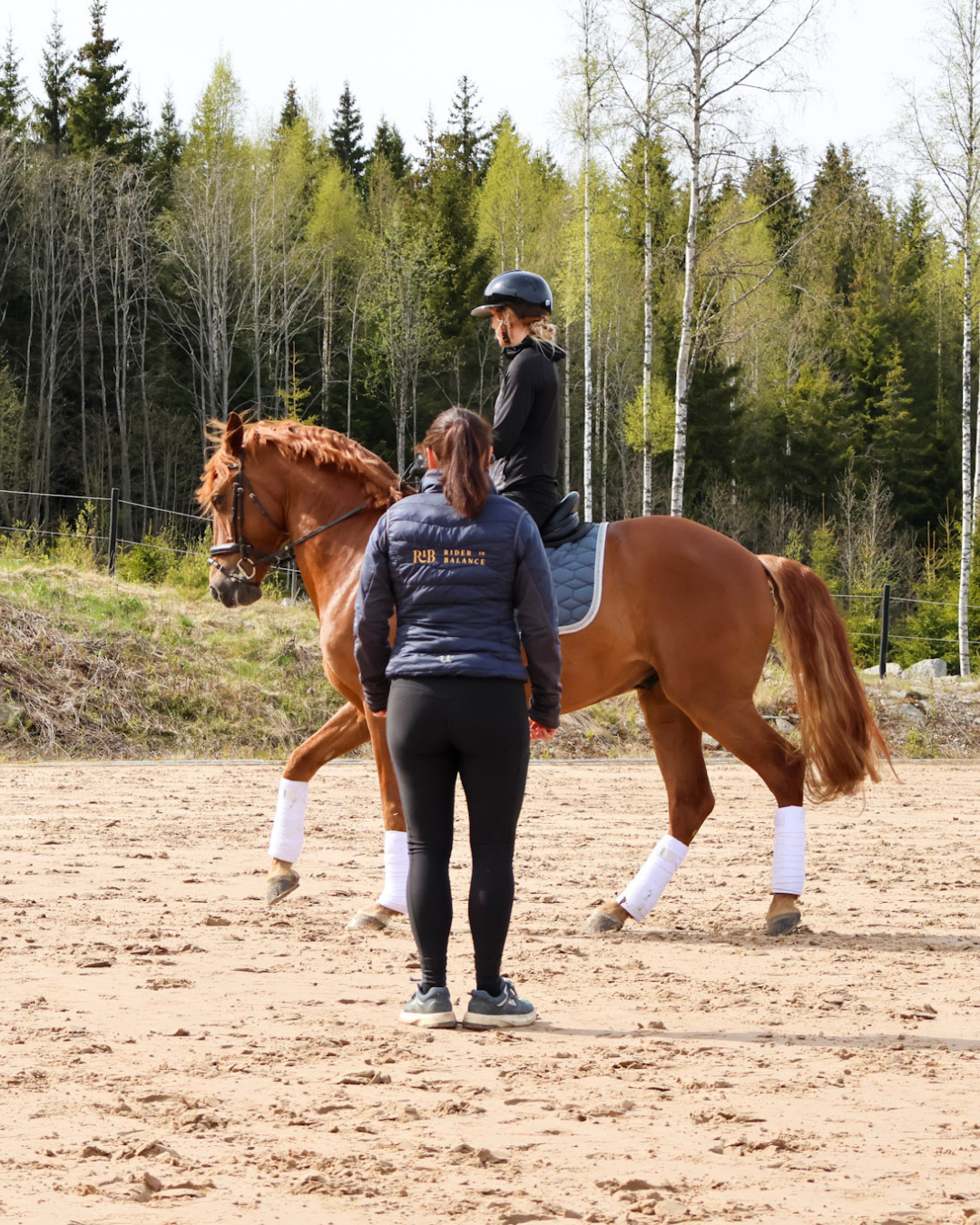
Although the riding technique itself remains the same, different horses have different needs. In step three, the rider learns to adapt the technique based on the horse’s response, level of training, and movement pattern. We assess what each individual horse needs more or less of: tempo, engagement of the hindquarters, or collection.
Read more
This step focuses on understanding the horse’s individual needs and adjusting the rider’s own body accordingly to achieve the desired result.
The goal is not only to perform the exercises correctly, but also to understand the mechanics behind them. This enables the rider to make more conscious and precise choices, creating a new level of quality in the riding and allowing the horse-and-rider combination to reach its full potential.
Experience the RIB Method in Practice
Do you want to learn the method’s step-by-step system and gain concrete exercises you can apply immediately?
Explore RIB Academy and start your development today.
The improved knowledge is put into practice while riding. Improved coordination and riding technique will contribute to better performance, health, and horse welfare.

RIB Academy
The RIB Concept consist of several tools and products
to learn to analyze and optimize body position, develop
body control, improve coordination and riding technique.
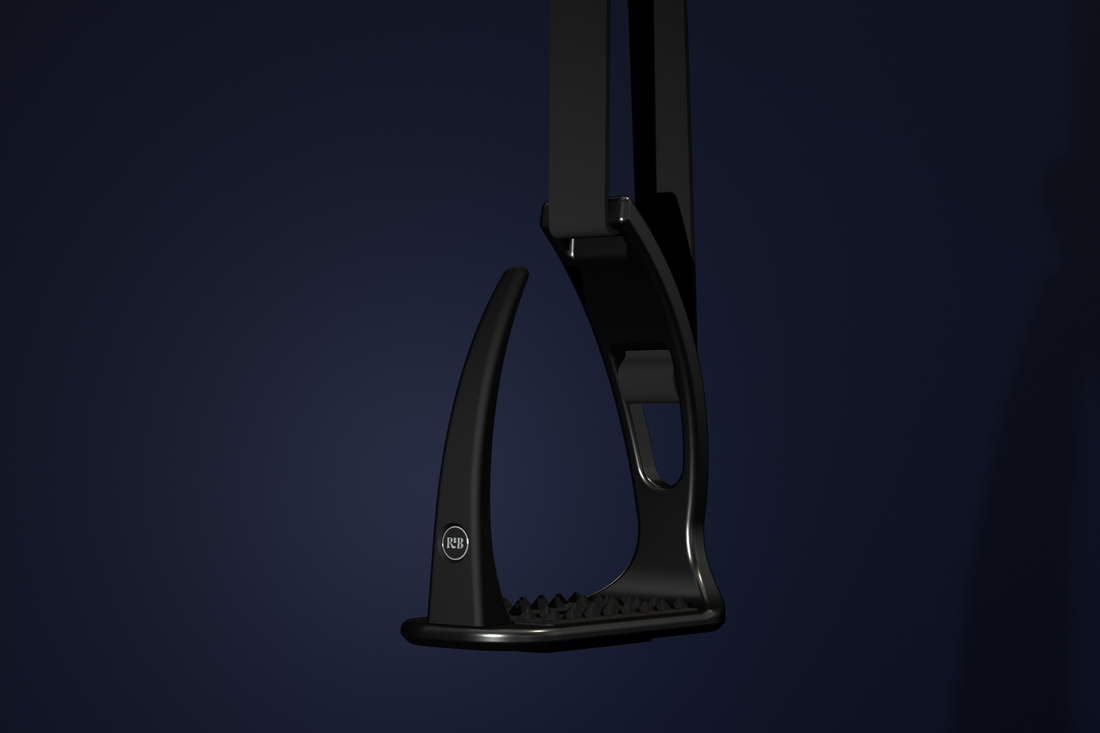
Products
Explore our specially developed and patendet products, made to improve balance and riding.

Rider Analysis App
Et analyse- og treningsverktøy for ryttere som gir deg personlig analyse av egen posisjon.